
The Short-term Regulatory Risk driver shows the mandatory regulations (hard laws) driving a risk in the near term, and how relevant each one is.
To open it, select a risk on the Overview tab, choose the Drivers tab, then select Short-term Regulatory Risk.
Why this matters
- See which near-term regulations are pushing a risk
- Focus on the most relevant and highest-impact regulations first
- Track how mandatory regulatory activity on a risk has changed
What the tab shows
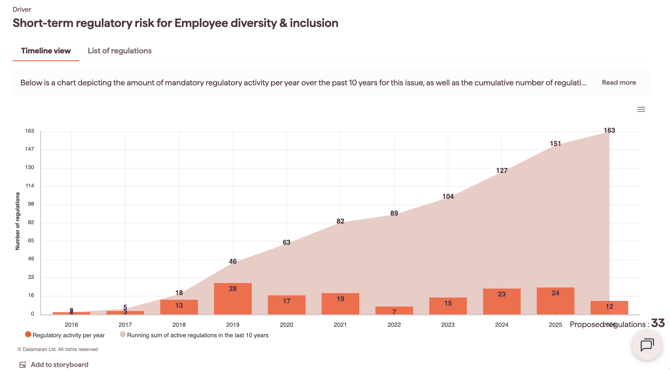
Timeline tab
In the Timeline tab, analyse how mandatory regulatory activity on the risk has evolved over the last ten years.
List of regulations tab
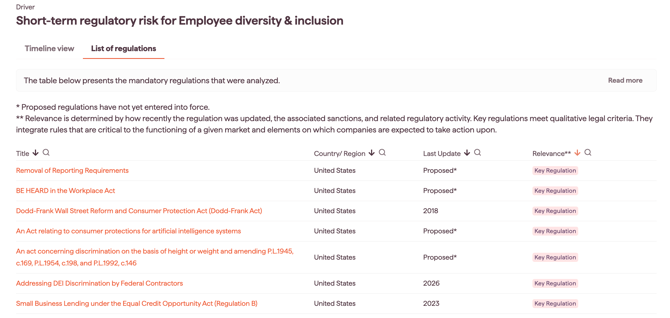
The List of regulations tab shows the most recent and applicable regulations, with sorting options. Regulations are grouped by:
- expected introduction within six months
- expected introduction over six months
- active, with commencement in the current year or an update within the last two years
- active laws that do not fall into the categories above
The Relevance column
The Relevance column rates each regulation High, Medium or Low, so you can prioritise. The rating combines three factors:
- Recency: proposed regulations introduced in the last six months score highest
- Penalties: regulations with penalties or sanctions score higher than those without
- Regulatory activity: the more linked regulations in the database, the broader the scope, and the higher the score
Key regulations
A regulation is marked Key when it meets set criteria based on its Essential and Impact elements:
- Essential elements: the fundamental parts of a law needed for it to exist or function
- Impact elements: the parts of a law with significant consequences, particularly for stakeholders or the wider market
Mandatory regulations need two Impact elements and one Essential element. Voluntary regulations need one Impact element and one Essential element. See more details: Regulations: Concepts and definitions
Key regulations matter because they directly affect how businesses operate. They set out your rights and responsibilities and give a clear framework for compliance, transparency and accountability.